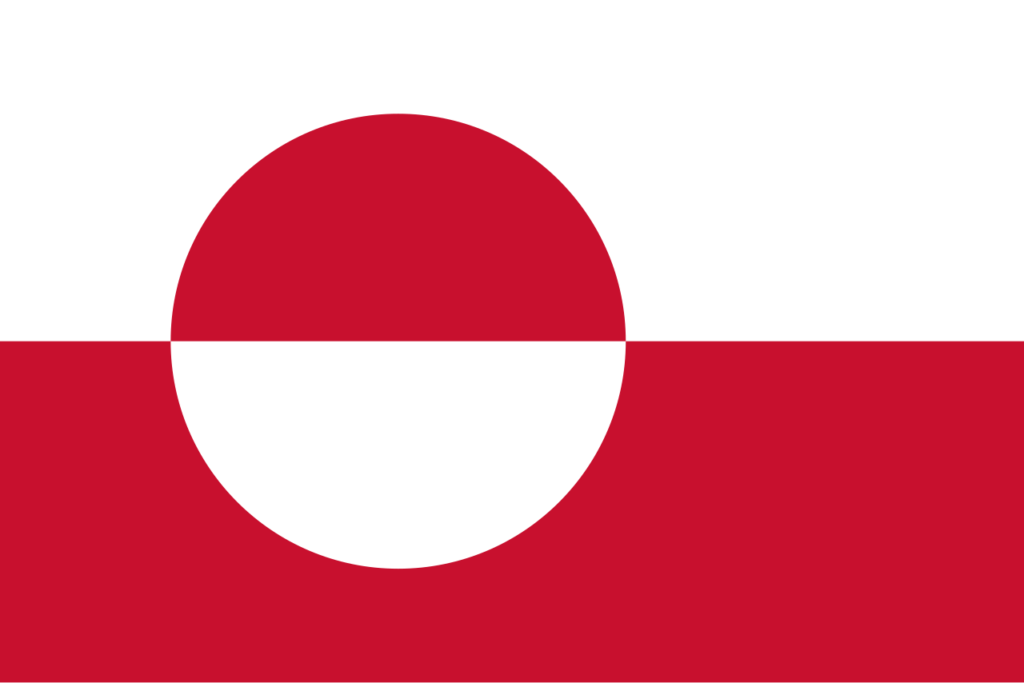
The western post-war international order ended this week as Donald Trump ramped up his rhetoric on acquiring Greenland. Yesterday, this escalated further with Trump’s sudden announcement of a 10% on tariff on eight countries, including the UK, for sending military officers to Greenland in an attempt to reinforce the European position that Greenland is not for sale. (Considering that the UK only sent a single military officer to Greenland, this must surely count as one of the most expensive British military deployments in history, per capita?)
But whether or not Trump ultimately succeeds in taking over the world’s biggest island, it looks to me like a gigantic foreign policy blunder that will damage US national interests more broadly and further reduce the Republican party’s chances of holding on to Congress in the midterms. Here are three broad reasons why.
‘Perfidious America’
This week saw the publication of two articles in the Guardian advocating that the UK and Europe should treat the US as a hostile power, one by commentator Alex Hurst and another reporting comments by Bronwen Maddox, the director of Chatham House, a prestigious UK foreign policy think-tank. Such anti-US sentiment is likely to increase if the US acquires Greenland through coercive means. The legal status of Greenland with respect to Denmark and the United States is clear: Denmark has a rock-solid legal claim to sovereignty over Greenland that dates back originally to 1721 (although Greenland has a high level of autonomy and governance over its affairs with the exception of foreign policy and defence). For the US to annex Greenland would be a grave violation of the UN Charter and the principle of self-determination, seriously undermining any future invocation of these principles by western nations.
Furthermore, US policy towards Greenland and Denmark has firmly acknowledged the Danish territorial claim over Greenland. In August 1916, when the Danish West Indies were sold to the US (becoming the US Virgin Islands), US foreign minister Robert Lansing signed a declaration that “the Government of the United States of America will not object to the Danish Government extending their political and economic interests to the whole of Greenland”. Trump has made much of his rebranding of the ‘Monroe Doctrine’ as a policy position that means the US will treat the Western hemisphere as its sphere of influence (leading to a revival of interest in the Nazi political theorist Carl Schmitt’s ideas about ‘Großraum’, or the spheres of influence around a regional hegemonic power). But the sale of the Danish West Indies and the accompanying recognition of Danish sovereignty over Greenland was seen as a specific exception to the Monroe Doctrine.
For the US to renege on its international agreements now would shatter NATO, undermine support for democratic regimes across the world, and reverse decades of US diplomatic strategy, contributing to a chaotic world of ‘might makes right’ – one in which most countries would need to massively increase spending on national security to deter aggression, something that has now started happening in Europe in response to Trump’s undermining of NATO.
None of this may matter to Trump and his ‘America First’ supporters, but it matters to the wider US electorate. A Reuters/Ipsos survey of 1,217 adults in the US this week found that only 17% of respondents approved of US efforts to acquire Greenland, vs 47% opposed; and when asked about the US using military force to acquire Greenland, 71% of adults (and 60% of Republicans) were opposed.
The mining minefield
Greenland’s known mineral resources have been valued at around 4 trillion USD. These include fossil fuels and rare earths, which have various critical military and advanced applications. Trump has directly referred to this as a reason for acquiring Greenland. But only about $186bn of the total value is considered realistically extractable; mining these resources is difficult and expensive, such that only one mine (producing anorthosite) is operational on Greenland. Mining the resources buried under Greenland’s ice is about 5-10x more expensive than in other parts of the world. The Inuit government has also erected legal barriers to mining, such as a ban on extracting uranium (which can be co-located with rare earths, as is the case at the Kvanefjeld project), and a 2021 ban on fossil fuel production.
In addition, the lack of associated infrastructure – roads, ports, and electricity generation – means that companies would need to invest a large amount of capital up-front before any mining can begin. Greenland’s minister for natural resources, Naaja Nathanielsen, noted that on average it takes 16 years to develop a mine. All this means that US demand for rare earths would be easier to satisfy through trade agreements with other countries that are known to have large reserves – such as India or Brazil.
Given that mining would be unlikely to produce results before 2040 (when Trump would be 94!), why does Trump appear so fixated with owning Greenland’s mineral resources? One possibility is that Trump has been obsessed with Greenland since the idea was planted in his mind back in 2018 by Ronald Lauder, a billionaire who now stands to profit handsomely from commercial interests that he has taken on Greenland in the years since.
National security claims
On Wednesday, Trump offered a somewhat eye-catching national security justification for owning Greenland: it’s needed for his ‘Golden Dome’ missile defence system! The details were scarce, though. According to Wikipedia, it’s possible that Greenland has strategic value here because it occupies a location that allows a US base to communicate with the three distinct planes of satellites that would comprise a space-based missile defence system.
The main objection to this claim must surely be that missile defence systems are likely to be ineffective. In Netflix’s recent drama House of Dynamite, a nuclear missile is launched at the US mainland and (spoiler) the US command launches interceptors to shoot the missile down. In the film, the interceptors are said to have a success rate of 61%. There was dispute between the writers of the show and the Pentagon around the accuracy of this figure (the Pentagon claims a 100% success rate from recent tests), but supposing that the success rate is closer to 80%, one would need to launch 2 interceptors to have a 96% chance of success and 3 for a 99% success rate. From my reading around this topic, the balance of opinion seems to be that these systems can be easily defeated by the use of countermeasures such as decoy missiles, and that they can increase the risk of nuclear escalation if a nuclear state feels that its retaliatory strike capacity is threatened by a missile defence system.
Other security issues were the need to defend Greenland from incursions by Russian and Chinese ships (which was quickly shown to be a baseless claim) and the need to monitor the transit of vessels through the shipping lanes in the Arctic that have become more accessible with the melting of sea ice. But the US does not need to own Greenland to achieve these aims; it already has the ability to deploy troops to Greenland under the 1951 Defense of Greenland Agreement with Denmark. The US has in fact been pursuing the opposite of what would be expected if these were serious concerns, having closed its Cold War-era bases in Greenland and drawn down its troops stationed there from a peak of 10,000 over the last few decades.
Trump’s Tupilaq moment?
In certain interpretations of Kalaallit mythology, an Inuit angakkuq (a ‘shaman’ of sorts, for want of a better word) could create a vengeful monster called a tupilaq out of animal parts and other gruesome materials. The monster would be given life through a ritual and then placed in the sea to seek out and destroy an enemy. But if the target had greater powers than the tupilaq’s creator, this could backfire, with the tupilaq being sent back to kill its creator instead.
Similarly, the US’s Greenland gambit looks like a damaging neo-imperialist vanity project that satisfies Trump’s innate greed and obsession with owning property, at the expense of US soft power. The reasons that the Trump administration have offered aren’t compelling enough to support the transfer of Greenland to the US against the wishes of its inhabitants or to countenance the violation of Danish sovereignty. It’s a toxic US foreign policy objective that will damage the Republican party in the midterms whether or not it’s achieved at all; and ultimately, it could be the inflection point that sees Trump’s political fortunes eventually laid to rest under the Greenlandic ice.
Further reading
On geopolitics
- Timothy Garton Ash, 2026. Whether or not Trump invades Greenland, this much is clear: the western order we once knew is history. https://www.theguardian.com/commentisfree/2026/jan/15/rude-new-world-internationalism-trump-greenland. A discussion of the “post-western world of illiberal international disorder”.
- Ashley Kirk, Lucy Swan, Tural Ahmedzade, Harvey Symons and Oliver Holmes, 2026. Greenland: new shipping routes, hidden minerals – and a frontline between the US and Russia?https://www.theguardian.com/world/2026/jan/15/greenland-new-shipping-routes-hidden-minerals-and-a-frontline-between-the-us-and-russia. Guardian analysis of the strategic context of Greenland, focusing on shipping routes and minerals.
- Patrick Wintour, 2026. End of western alliance means UK must be bolder, says Chatham House director. https://www.theguardian.com/politics/2026/jan/13/end-of-western-alliance-trump-uk-chatham-house-director. Reporting of a lecture by Bronwen Maddox, director of Chatham House: “Donald Trump has ended the western alliance, requiring the UK to adopt a bolder, more independent foreign policy towards the US and China.”
- Alexander Hurst, 2026. Europe must now tell Trump that enough is enough – and cut all ties with the US. https://www.theguardian.com/commentisfree/2026/jan/14/europe-trump-democracy-violent-conquest-federalism. Hurst advocates for a robust anti-US response by European countries, to protect democracy and the rule of law.
- United Nations press release, 2026. Greenland: UN experts urge United States to respect international law and right to self-determination. https://www.ohchr.org/en/press-releases/2026/01/greenland-un-experts-urge-united-states-respect-international-law-and-right. Discusses the legal principles around Greenland: “The peoples of Greenland, as a distinct people, are entitled to the full and free exercise of their right to self-determination, a core purpose of the United Nations, enshrined in Article 1 of the International Covenant on Civil and Political Rights, to which the United States has been a party since 1992, as well as in articles 3 and 4 of the UN Declaration on the rights of Indigenous Peoples.”.
- Marc Weller, 2026. Who owns Greenland? https://www.chathamhouse.org/2026/01/who-owns-greenland. A history of Denmark’s claim to Greenland and the current situation with Greenland’s self-government.
- Nordics.info (provided by Aarhus University), 2019. https://nordics.info/show/artikel/declaration-from-usa-on-danish-sovereignty-of-greenland-1916. Covers the 1916 declaration by the US foreign minister Robert Lansing, respecting Danish sovereignty over Greenland.
- Jason Lange, 2026. Just one in five Americans support Trump’s efforts to acquire Greenland, Reuters/Ipsos poll finds. https://www.reuters.com/world/europe/just-one-five-americans-support-trumps-efforts-acquire-greenland-reutersipsos-2026-01-14/. Reporting of the Reuters/Ipsos poll of US adults on Trump acquiring Greenland.
On mining
- Justin Klawans, 2026. Why Greenland’s natural resources are nearly impossible to mine. https://theweek.com/world-news/greenland-natural-resources-impossible-mine. A general overview of the increased difficulty of mining in Greenland vs elsewhere.
- Lukas Slothuus, 2026. Greenland has vast natural resources – but that’s not why the US wants it. https://www.independent.co.uk/news/world/europe/greenland-trump-why-natural-resources-b2899522.html. Discusses the domestic political context of mining in Greenland.
- Meredith Schwartz and Gracelin Baskaran, 2026. https://www.csis.org/analysis/greenland-rare-earths-and-arctic-security. A deep dive into Greenland’s rare earth mining, with recommendations for US foreign policy on securing rare earths (spoiler: it doesn’t involve taking over Greenland).
- Tom Burgis, 2026. How a billionaire with interests in Greenland encouraged Trump to acquire the territory. https://www.theguardian.com/us-news/2026/jan/15/ronald-lauder-billionaire-donor-donald-trump-ukraine-greenland. Guardian article about Ronald Lauder and the role he played in raising the issue of Greenland to Donald Trump’s attention.
On security
- Wikipedia. Golden Dome (missile defense system). https://en.wikipedia.org/wiki/Golden_Dome_(missile_defense_system)#Strategic_value_of_Greenland. “Defense analysts note that Pituffik Space Base serves as a critical ground station bridge, being one of the few defensible places on Earth that can directly communicate with all planes in the constellation. While the U.S. already operates from Pituffik with Denmark’s consent, some analysts argue sovereignty would eliminate political constraints and ensure uninterrupted control over assets critical to Golden Dome.”
- Scientists for Global Responsibility, 2003. Why Missile Defence (MD) doesn’t make sense and is a bad idea. https://www.sgr.org.uk/resources/why-missile-defence-md-doesn-t-make-sense-and-bad-idea. A summary of the reasons why missile defence programmes aren’t effective uses of defence spending.
- Ted Johnson, 2025. Noah Oppenheim Talks About Writing ‘A House Of Dynamite,’ The Pentagon Pushback & Uncovering One Scary Fact Of The U.S. “Nuclear Monarchy”. https://deadline.com/2025/11/noah-oppenheim-house-of-dynamite-writer-interview-1236617825/. An interview with screenwriter Noah Oppenheim, looking at the 61% efficacy figure for missile interceptors presented in House of Dynamite.
- Peter Suciu, 2026. https://nationalinterest.org/blog/buzz/us-military-once-had-much-bigger-presence-greenland-ps-011726. A history of US military presence on Greenland; debunks US national security claims about Greenland.