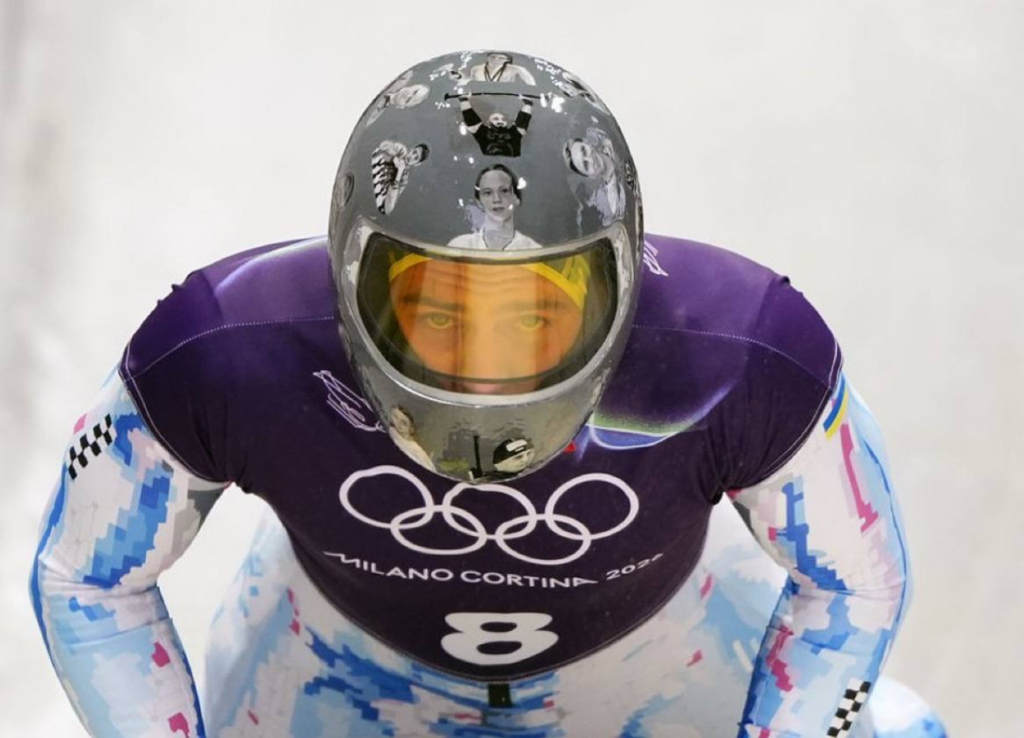
I’ve been following some of the coverage of the 2026 Winter Olympics in Milano-Cortina this week as some interesting issues around the boundaries of political expression in sport have been cropping up. To keep things short, I’ll use the Last Leg’s ‘Is it OK?’ format to explore three of these issues.
1. Is it okay that some athletes have criticised the political situation in their home country?
Yes.
US athletes have been expressing their ambivalence at representing the US, given the ongoing brutal tactics that the US Immigration and Customs Enforcement agency (ICE) have been using in Minnesota and elsewhere to arrest and deport illegal immigrants. Those athletes speaking out have faced a backlash from Trump’s administration, for example, with Hunter Hess talking about how representing the US brings up mixed emotions, and Trump labelling Hess a “real Loser” in response.
“I think it brings up mixed emotions to represent the U.S. right now,” Hess said. “There’s obviously a lot going on that I’m not the biggest fan of and I think a lot of people aren’t. Just because I’m wearing the flag doesn’t mean I represent everything that’s going on in the U.S.” – Hunter Hess
But this is clearly a reasonable position to take. Not every citizen of a country has to agree with 100% of their government’s policies and actions all of the time. It would be very strange if everyone did that, considering the questionable track records of all national governments on practically every policy issue you can think of. Nor are athletes attending the Games as propagandists for their own countries. IOC spokesman Mark Adams, referring to this and to the booing of athletes representing Israel, has said that “athletes shouldn’t be punished for the actions of governments or the countries where they are from.”
2. Is it okay that US audiences watching the Olympics opening ceremony on NBC didn’t hear JD Vance being booed?
This one’s unclear.
JD Vance and his wife Usha drew booing from sections of the crowd when they appeared on the big screen. The Guardian’s reporting noted that NBC’s footage for US viewers didn’t show clearly the US vice-president being booed, while that of other broadcasters does. NBC denies having edited their footage to mute the crowd reaction, and Snopes (a great site for factchecking) was unable to adjudicate whether NBC had edited the footage. So on the factual claim, I think NBC deserves the benefit of the doubt. However, the tendency of the current US administration to demand favourable media coverage at sporting events is corrosive to trust in news sources, and should be resisted.
3. Is it okay that Ukrainian skeleton athlete Vladyslav Heraskevych was banned from competing over his helmet commemorating deceased athletes?
Yes.
This is a really unfortunate situation, considering that the political message here on the human cost of the war in Ukraine is one many people agree with, but I think the reasoning by the IOC is correct. There was a risk that this would constitute political expression in the field of play, which the IOC rules prohibit.
Some have argued that remembrance of the dead is not political. (There are, however, examples where remembrance is political or can be perceived to be, e.g. when Japanese politicians visit Yasukuni shrine to commemorate Japan’s war dead, including some war criminals, it generates domestic and foreign controversy, particularly from China.) But IOC President Kirsty Coventry was clear that it was not the message that the IOC disagreed with, but Heraskevych’s insistence on wearing the helmet as a form of expression while competing.
Heraskevych and other commentators have also cited the example of Italian snowboarder Roland Fischnaller competing while wearing a helmet with a (banned) Russian flag on it, but in that case the IOC investigated and found that the flags simply reflected Fischnaller’s participation in previous Olympics and the countries that hosted them. (Even so, perhaps the IOC should ultimately have issued a reprimand in that case, out of fairness to all athletes.) It can be difficult to disentangle the additional specific factors in a given case and discern the intentions of those involved, which could mean that making an exception for Heraskevych would lead to other athletes abusing the rules in the future in an attempt to gain a psychological edge over their opponents – or worse, creating an incentive for governments to require their athletes to use the Games as an arena for indirectly political messaging, as IOC spokesman Mark Adams pointed out. The Guardian’s analysis of the decision raised the spectre of Iran potentially forcing its athletes to mourn the assassinated head of the Iranian Revolutionary Guard Corps, even as it celebrated Heraskevych’s efforts to refocus attention on Ukraine as a PR win.
In the ‘field of play’, where athletes actually compete against each other, potential distractions shouldn’t be permitted; anything that calls into question the integrity of athletes’ sporting achievements could obviously unravel the whole basis of athletic competition. There’s relatively wide latitude for political expression in much of the Games, including interviews, press conferences, mixed zones and social media, and if those areas aren’t enough, perhaps athletes will extend protests to other elements of the Olympics where political expression is currently restricted, such as the medal ceremonies; this has happened in the past and isn’t necessarily a bad thing, considering that host countries have tried to use the Olympics for political ends before. But the field of play should, as the IOC put it, remain “sacrosanct”.
Further reading
On political expression at the Olympics
- Connor Greene, February 2026. What to Know About the Olympics’ Political Speech Restrictions. https://time.com/7377913/2026-winter-olympics-ukraine-heraskevych-helmet-political-speech-protest-rule-50. Provides historical context on how the IOC has sought to limit political speech in previous Games and examples of how athletes have worked around those restrictions.
- UNN, February 2026. IOC allowed Italian snowboarder to compete in a helmet with a Russian flag. https://unn.ua/en/news/ioc-allowed-italian-snowboarder-to-compete-in-a-helmet-with-a-russian-flag. Reports that Ronald Fischnaller competed in a helmet with a Russian flag that reflected his Olympic Games’ host countries.
- International Olympic Committee, February 2026. Skeleton pilot Vladyslav Heraskevych not allowed to participate at Milano Cortina 2026 after refusing to adhere to the IOC athlete expression guidelines. https://www.olympics.com/ioc/news/skeleton-pilot-vladylsav-heraskevych-not-allowed-to-participate-at-milano-cortina-2026-after-refusing-to-adhere-to-the-ioc-athlete-expression-guidelines. IOC statement about Vladyslav Heraskevych not being allowed to compete in the Games.
- Emma Smith and Jess Anderson, February 2026. ‘Price of dignity’ says Ukrainian athlete banned over helmet. https://www.bbc.co.uk/sport/articles/c309pj8d8qqo. BBC coverage of the IOC decision to ban Heraskevych from competing.
- Reuters, August 2021. Explainer: Why Yasukuni shrine is a controversial symbol of Japan’s war legacy. https://www.reuters.com/world/asia-pacific/why-yasukuni-shrine-is-controversial-symbol-japans-war-legacy-2021-08-13/. Reuters article explaining why Yasukuni shrine is a controversial war memorial in Japan.
- Lizzy Yarnold, February 2026. Olympic chiefs have got it badly wrong over Heraskevych ban and owe him an apology. https://www.theguardian.com/sport/2026/feb/13/milano-cortina-olympic-chiefs-vladyslav-heraskevych-ban-winter-olympics-ukraine. A defence of Heraskevych by British former skeleton racer Lizzy Yarnold.
- Sean Ingle, February 2026. Heraskevych’s ‘helmet of memory’ forces IOC on to PR back foot at Winter Olympics. https://www.theguardian.com/sport/2026/feb/12/vladyslav-heraskevych-ioc-skeleton-ukraine-helmet-winter-olympics. Commentary by Sean Ingle which portrays the situation with Heraskevych as a PR blunder by the IOC, even though it concedes that making an exception could lead to situations like “the Iranian government [forcing] its athletes to mourn the head of the revolutionary guard”.
On JD Vance being booed
- Tom Lutz, February 2026. NBC appears to cut crowd’s booing of JD Vance from Winter Olympics broadcast. https://www.theguardian.com/us-news/2026/feb/06/nbc-appears-to-cut-crowds-booing-of-jd-vance-from-winter-olympics-broadcast. The original Guardian article that seemed to suggest NBC suppressed booing of JD Vance from their Olympic broadcast.
- Bryan Armen Graham, February 2026. The world heard JD Vance being booed at the Olympics. Except for viewers in the US. https://www.theguardian.com/sport/2026/feb/07/jd-vance-boos-winter-olympics. Guardian Coverage of the perceived difference in coverage of JD Vance’s attendance at the Winter Olympics.
- Sam Neumann, February 2026. NBC categorically denies editing crowd boos of JD Vance from Winter Olympics broadcast. https://awfulannouncing.com/nbc/denies-editing-jd-vance-boos-olympics-opening-ceremony-audio.html. A report in which NBC denies editing the footage of the Olympic opening ceremony.
- Joey Esposito, February 2026. Did NBC edit footage of Vance getting booed at 2026 Winter Olympics? We investigated. https://www.snopes.com/news/2026/02/11/nbc-vance-booed-olympics/. Snopes investigation doesn’t uphold claims of deliberate editing by NPC: “Snopes could not independently confirm whether NBC Sports deliberately altered the crowd audio during postproduction, so we have opted not to put a rating on this claim.”