Imagine that, as CEO of one of the top ten biggest companies in your industry, you had to get rid of your sales director (an executive that you hired personally) a year ago, because it turned out they had lied to you about their deep connections to a hardened criminal. You had previously delegated the due diligence for this hire to your Talent Acquisition team, since you have, well, a huge company to run. The team later informed you that your new sales director passed their reference checks.
Then, last week, your Head of HR suddenly informed you that your former sales director only passed the company’s due diligence process because someone in Talent Acquisition intervened directly after an important reference check failed. HR didn’t tell you this before, because you were so keen on employing the new sales director that they didn’t want to block that person’s hiring! And now the trade press has the story, the shareholders are up in arms, and the board of directors wants you to resign…
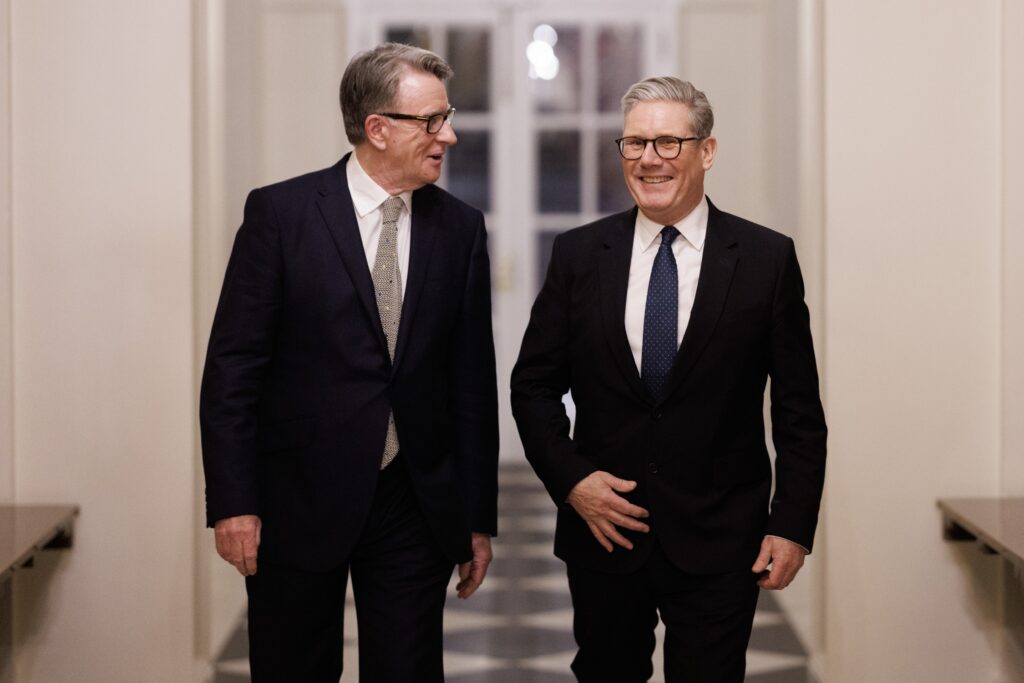
That’s the position Sir Keir Starmer found himself in this week when it was reported by the Guardian that Peter Mandelson, the former ambassador to the United States that Starmer appointed, had failed developed vetting – and that the prime minister hadn’t been told about it until now. In Starmer’s position, I’d be “absolutely furious” too.
But, it gets worse. It’s been reported that officials across government have discussed withholding key documents that would shed light on what happened, in breach of the Parliamentary humble address that requires the material to be released. Any documents that might be “prejudicial to UK national security or international relations” are meant to be passed to the Intelligence and Security Committee, which oversees matters of UK intelligence. And yet, some officials have argued for using loopholes to avoid disclosing the vetting documents to the full committee – consisting of senior ministers and officials who are bound by the Official Secrets Act! There’s no excuse, in my view, for any relevant documents to be withheld from the committee, especially given that Parliament has clearly mandated that disclosure is required – and there’s no higher authority than Parliament in the UK system of government. Withholding relevant information would clearly amount to a cover-up.
It’s also hard to believe that it took more than two weeks for Sir Keir to be informed of Mandelson’s vetting being overruled, by Antonia Romeo and Catherine Little, the government’s most senior civil servant and the permanent secretary at the Cabinet Office. Apparently, it was a “complex process” that required them to perform various “expedited checks” including obtaining legal advice. This is (with the benefit of hindsight) a serious failure of government that has the potential to topple the prime minister three weeks before the local elections in May. You would think, in the huge company analogy, that the CEO would be informed rather promptly if a major scandal was about to engulf the company’s senior management team just before its annual earnings call…
What should happen next?
The leaders of the other major political parties have called on Keir Starmer to resign over the scandal – as the SNP’s Westminster leader Stephen Flynn put it, Starmer is either “incompetent, gullible or a liar”. Sam Coates, the deputy political editor at Sky News, seems to opt for the latter, suggesting that someone at No. 10 must have known that Mandelson failed vetting; Donald Macintyre, writing for Politico back in February, drew parallels with the 1960s Profumo affair that helped bring down Harold Macmillan’s government, and implied that enough was publicly known about Mandelson’s unsuitability for the role that Starmer was either incompetent in evaluating Mandelson and proceeding to appoint him, or irresponsible in delegating the decision to others (i.e. Morgan McSweeney).
But I think these assessments are a little unfair and a little premature; the CEO can’t oversee every potentially consequential decision at once, so will naturally have to delegate some decisions. Unless it’s established that Starmer is lying to Parliament (which I feel is extremely unlikely, given his background as a lawyer and former Director of Public Prosecutions), it seems appropriate to wait at least until the facts are further clarified on Monday.
In the meantime:
- The official within the Foreign Office who overruled the outcome of the vetting process should be identified and fired – not for exercising their prerogative to overrule the vetting process, but for the unforgivable failure to communicate that clearly up the management chain, which may have led to Starmer unknowingly misleading Parliament. Media reports suggest this massively misguided mandarin was probably Olly Robbins, who has already been dismissed.
- Given the enormous amount of damage this scandal has done to public trust in the civil service and especially the Foreign Office, a charge of misconduct in public office might also be considered (although the bar for this is very high).
- And finally, the government needs to take steps to ensure that this situation won’t happen again in the future. The ability of the Foreign Office to overrule the outcome of the developed vetting process has now apparently been stopped.
In the long term, it would also be best to change the way the ambassador to the US is selected – so that it isn’t a political appointment but is guided by independent assessments of who is most qualified to carry out the role, rather than short-term political goals (in Mandelson’s case, around securing a trade deal with Trump’s administration). Shoring up the due diligence mechanisms may help: former PM Gordon Brown suggested introducing US-style confirmation hearings for ministers and senior government appointments in February, as part of a series of anti-corruption measures.
But overall, it seems to me that, with all the other global crises happening in recent times, ultimately the prime minister of the day has much more important things to focus on than hand-picking the ambassador to the US, and I find it both surprising and disappointing that the government has been so thoroughly shaken by this failure of the Talent Acquisition function of UK plc’s HR department.
Further reading
- Matthew Weaver, April 2026. Peter Mandelson’s failed security vetting: a timeline of the controversy. https://www.theguardian.com/politics/2026/apr/17/peter-mandelson-failed-security-vetting-timeline-keir-starmer. The Guardian’s summary of the key events around Mandelson’s appointment and dismissal.
- UK Cabinet Office and Darren Jones MP, February 2026. Updates on Standards in Public Life. https://www.gov.uk/government/speeches/updates-on-standards-in-public-life. Statement from the Chief Secretary to the Prime Minister which outlines changes to the appointments system, requiring candidates for direct ministerial appointments to have passed through national security vetting.
- Donald Macintyre, February 2026. Starmer still needs to explain why he went ahead with Mandelson’s appointment. https://www.politico.eu/article/keir-starmer-peter-mandelson-ambassador-appointment-scandal/. Sets out the many reasons Mandelson should never have been appointed in the first place, and some of the reasons it happened anyway.
- Sam Coates, April 2026. What really happened with Peter Mandelson, and how Olly Robbins did PM two favours. https://news.sky.com/story/what-really-happened-with-peter-mandelson-and-how-olly-robbins-did-pm-two-favours-13533153. “The really, really toxic claim doing the rounds on Thursday night [16 April] was that surely someone – anyone – in Number 10 DID know the UKSV agency turned down the vetting.”
- Henry Dyer, Pippa Crerar and Paul Lewis, April 2026. Officials debate withholding Mandelson vetting documents from parliament. https://www.theguardian.com/politics/2026/apr/16/officials-debate-withholding-mandelson-vetting-documents-from-parliament. Guardian report that senior officials across government have argued for withholding documents from the Intelligence and Security Committee.
- Paul Lewis, Henry Dyer and Pippa Crerar, April 2026. Starmer was left in dark about Mandelson’s vetting by two other top civil servants. https://www.theguardian.com/politics/2026/apr/17/keir-starmer-kept-in-dark-peter-mandelson-vetting-two-top-civil-servants. Cabinet secretary Antonia Romeo and Cabinet Office permanent secretary Catherine Little were made aware of Mandelson’s vetting failure in March, but took more than two weeks to notify Keir Starmer.
- Anna Lamche, February 2026. Mandelson scandal is ‘serious’ for Starmer but PM is ‘man of integrity’, Brown says. https://www.bbc.co.uk/news/articles/cvg1g83zvlyo. Gordon Brown, in an interview with Radio 4’s Today Programme, made suggestions to change the appointments process, including a committee to review pre-appointment hearings.