Happy Easter! Amid boxes of (ever smaller and more expensive) Easter eggs and the traditional roast lunch with family, it’s easy for me to forget that growing up, I used to celebrate Easter with my family in church; I was brought up Catholic and we almost always attended the Masses in Holy Week, including the dramatic Easter Vigil services on Saturdays – think The Traitors, but with fewer hooded cloaks, no Claudia Winkleman and a lot more hymns being sung. One year, we attended a Mass that started outdoors in a church car park in south Wales shortly before midnight. The Paschal candle was lit by the priest from a burning brazier, and from it the smaller candles each of us carried, wearing little white cardboard skirts that protected our fingers from drops of hot wax, as we proceeded into the dark interior of the church, gradually illuminating the interior with hundreds of flickering orange flames as an obvious metaphor – faith literally enlightening the world.
As I grew older, I increasingly needed to root my faith in something more than traditions and rituals. I needed a solid intellectual foundation – to know that I was right (or not) about the nature of reality – just as Jesus had told Peter that he would be “the rock on which I will build my church”. (I suppose one benefit of a Christian upbringing is that I have a pretty good general understanding of the Bible, which comes in surprisingly handy for appreciating many of the cultural references I come across.) As you’ve probably guessed, like many others before me, my pursuit of this quest for epistemic justification during my student years led eventually to the total unravelling of the whole tapestry of belief.
Certain experiences stand out from this (non-) spiritual journey. I remember borrowing a book on logic and philosophy from the library at my Catholic high school, which was run by the always kind and empathetic mother of one of my close childhood friends. There was the time my father told me and my sister that he saw raising us in the faith as hugely useful for giving us a ready-made set of moral values (as if we might otherwise have become little barbarians intent on the pillaging of the village we lived in). In sixth form, there was the PowerPoint presentation I put together summarising the traditional philosophical proofs of God’s existence – which my classmates immediately poked massive holes in, to my embarrassment. And there were the many sermons I sat through in church, where in the privacy of my mind I constructed counter-arguments to the priest’s words, sentence by sentence, half-wishing that I could debate him afterwards.
At university, in Cambridge, there was the Catholic priest who agreed to meet me to discuss faith issues, but of whom I now only remember the sense that he was deeply disinterested in engaging with apologetics; I think he saw faith as ultimately a pure act of belief that no amount of evidence would ever change (which is a terrible way to decide what to believe, as conspiracy theorists amply demonstrate). And then there was the close-knit evangelical community in south London who prayed and ate together, but whose leader once gave a homophobic sermon during a service, that nobody present challenged.
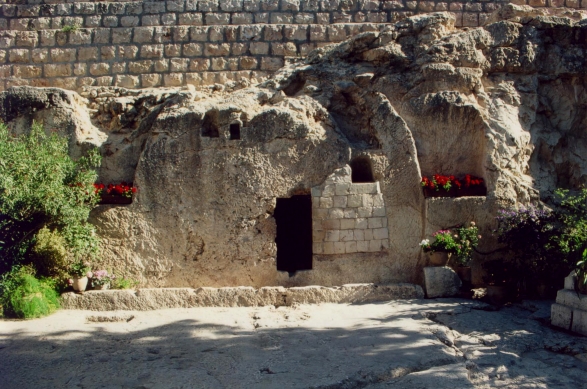
But none of these in isolation was definitive; ultimately, it was the state of the evidence, scattered across annotated Bible websites, books on the philosophy of religion, and so on, and the fact that nobody I spoke to was ever able to convincingly address my objections, that made my faith in Christianity untenable. (I still have a copy somewhere of Mere Christianity by CS Lewis, where I’d pencilled in the margins at every single point on which I disagreed with his arguments.) This, after all, is the point of Easter in Christian doctrine: if Jesus didn’t rise from the dead as documented in the Gospels, then all bets are off and one should move on to assessing the next viable belief system. (If it happened today, we’d at least have some warning in advance – the guard posted at Jesus’s tomb would have made a small fortune betting on the resurrection on Polymarket…)
I may not have ended up taking the side of the evangelicals, but I did admire their dedication to engaging with rational arguments over their truth claims about God, Jesus and the Bible. If only the same could be said about the leadership of the United States today. Ted Widmer, writing in the Guardian this week, referred to a meeting in 1962 between former US Secretary of State Dean Acheson and French President Charles de Gaulle. John F. Kennedy had sent Acheson to inform de Gaulle that the Soviet Union had stationed nuclear missiles in Cuba. Acheson offered to show de Gaulle the photographic evidence, but de Gaulle declined, saying, “The word of the President of the United States is good enough for me.” As Ted Widmer observes in his article, “Today, no Nato leader would say that.”
Much has already been said and written about the war in Iran and I feel I don’t have a lot to add. It seems to me that, leaving the legal and moral objections aside, and despite the brutal and hostile theocratic regime in Iran, there can be no possible justification (jus ad bellam) for European leaders to join the US and Israel in military action when President Trump appears unable to clearly articulate coherently to the American people the case for going to war in the first place. In the absence of a clear and compelling rationale for intervention (Putin, at least, felt the need to write up a long essay distorting Russian/Ukrainian history to justify his war in Ukraine), it’s truly a war that has to be taken on faith.
And then there’s Pete Hegseth, Trump’s cartoonishly villainous Secretary of War, who seems to be on a decade-long personal crusade against Iran, and recently was reported to have prayed for “overwhelming violence of action against those who deserve no mercy” in a service at the Pentagon – earning a rebuke from the Pope, who said that God ignores the prayers of those who wage war. It’s probably for the best, then, that experiments in healthcare settings have largely shown prayer to be ineffective anyway…
But beyond the Iran war, the big question this year will be whether the US public still puts their faith in Trump as the delayed economic consequences of US foreign policy start to manifest and the midterms approach. If the rapid churn in political leaders since the Great Recession of 2008 has taught us anything, it’s that faith, once lost, is exceedingly difficult to regain.
Further reading
- Ted Widmer, March 2026. Trump is flailing in Iran. Every word he says adds to the muddle. https://www.theguardian.com/commentisfree/2026/mar/31/trump-words-iran-war-churchill. Commentary on Trump’s use of language, including the anecdote about Charles de Gaulle trusting the word of the US President.
- Aaron Erlich, October 2004. Kerry Got that de Gaulle Story Half-Right. https://www.historynewsnetwork.org/article/kerry-got-that-de-gaulle-story-half-right. Further detail on the meeting between JFK’s representative Dean Acheson and Charles de Gaulle.
- Rory Carroll, March 2026. Pope seems to rebuke Hegseth in remarks about leaders with ‘hands full of blood’. https://www.theguardian.com/world/2026/mar/29/pope-rebuke-trump-leaders-with-hands-full-of-blood. Reporting of comments by Pope Leo which appear to criticise Trump and Hegseth for being war leaders conducting an unjustified war.
- Jason Wilson, March 2026. ‘America’s mortal enemy’: Pete Hegseth expressed extreme antipathy toward Iran for years. https://www.theguardian.com/us-news/2026/mar/12/pete-hegseth-antipathy-iran. Account of Pete Hegseth’s opposition to and advocation of conflict with Iran over the previous decade.